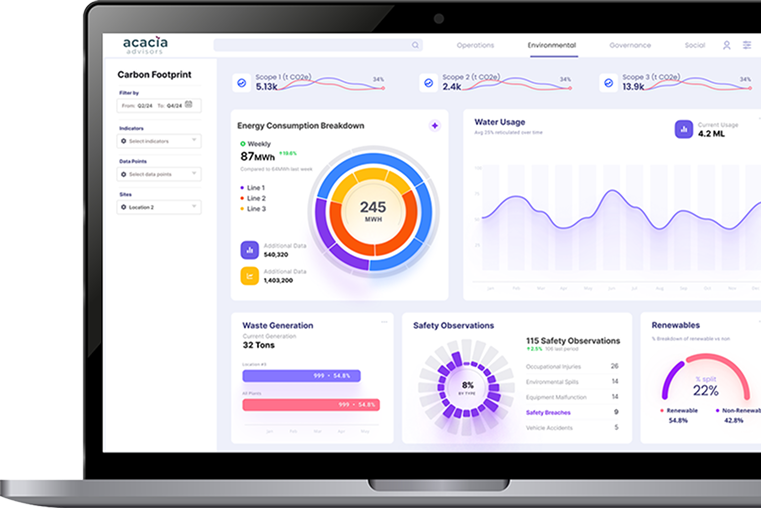

Acacia’s advisors aren’t consultants — they’re former CIOs, CTOs, and senior technology executives who’ve faced the same board pressure, inherited the same technical debt, and made the same calls you’re being asked to make now.






The first 100 days of a new technology leadership role are the most consequential — and the least visible. You’ve inherited a landscape that doesn’t match what you were told during the interview. The board is watching. And the pressure to commit to a direction is building before you’ve had time to truly diagnose what’s beneath it.
The clock is real. Over 70% of CIOs have been in their positions for less than five years — and nearly 40% for two years or less. Tenures are compressing, not lengthening. The margin for a slow start has never been smaller.
The wrong call, made publicly, creates the kind of exposure that ends tenures. Not because you made a bad decision — because you inherited one nobody surfaced before you had to act. The failure of a major IT project is one of the primary reasons for a CIO dismissal (PwC).
Generic consulting firms arrive with frameworks that don’t fit your environment. Vendor-led assessments arrive at conclusions that serve the vendor. Large firms send seniors to win the work and juniors to deliver it.

What makes Acacia different


Our advisors are former CIOs, CTOs, and senior technology leaders. At any given time, Acacia fields a team of 10–30 former operators working directly with clients — not as background advisors, but embedded in active engagements, driving outcomes alongside your team.

We have no product to sell, no platform to implement, no commission on what you choose. Every recommendation is based on your context alone. That’s not a policy — it’s the only way we know how to work.

We work with organizations where the stakes are high, the margin for error is not, and the right answer isn’t obvious until someone who’s actually held your role helps you see it clearly.
A newly appointed CIO inherited a sprawling infrastructure with no clear ownership model. Within weeks, the board demanded a modernization roadmap. We mapped the landscape, identified the real constraints, and delivered a phased approach that protected near-term stability while building toward the future.

The Situation: A technology leader entered an environment cluttered with shadow IT and redundant department-level subscriptions that bypassed central oversight.
The Action: We performed a vendor-neutral diagnostic to map how these systems actually interacted—or failed to—with the core operating stack.
The Result: Delivered an honest picture of the technical debt, allowing the leader to halt budget leakage and redirect resources toward a defensible data strategy.

The Situation: Under intense board pressure to “do something with AI,” a CTO inherited disconnected pilots that looked good in demos but lacked the data integrity to ever scale.
The Action: We bypassed the tool demos to conduct a practitioner-led assessment of the underlying infrastructure and data maturity.
The Result: Replaced a dozen “science projects” with a board-ready roadmap that prioritized two high-impact use cases with a viable path to production.

The Situation: A leader took over an organization that passed its security audits but lacked a defensible posture for actual service restoration after a breach.
The Action: We pressure-tested the social and political dependencies—the undocumented parts of the recovery plan that usually fail during a crisis.
The Result: Established a transparent operating model that gave the leader the organizational permission to kill “zombie projects” and refocus talent on the initiatives that actually move the business.

The Situation: A new leader found the technology team paralyzed by “reactive” firefighting and a project list dictated by the loudest voices in the room.
The Action: We mapped the informal power dynamics and hidden dependencies that were quietly consuming the team’s capacity.
The Result: Established a transparent operating model that gave the leader the organizational permission to kill “zombie projects” and refocus talent on the initiatives that actually move the business.


For newly appointed technology leaders who need an honest picture of what they’ve inherited before committing to a direction. A confidential, structured diagnostic across four dimensions: business and value alignment, operating model and execution, technology and data, and people, culture, and leadership. The output is a board-ready roadmap built on what’s actually happening — not what you were told in the interview.
Most conversations begin the same way — a technology leader who’s just stepped into a new role, or one who’s been carrying a problem they can’t get a straight answer on. We’ll tell you honestly whether Acacia is the right fit.